By Dr. Shruthi Thennati
MBBS, MD Medicine | PgDip Endocrinology (UK) | DipIBLM
General Physician | Metabolic Physician | Lifestyle Medicine Practitioner
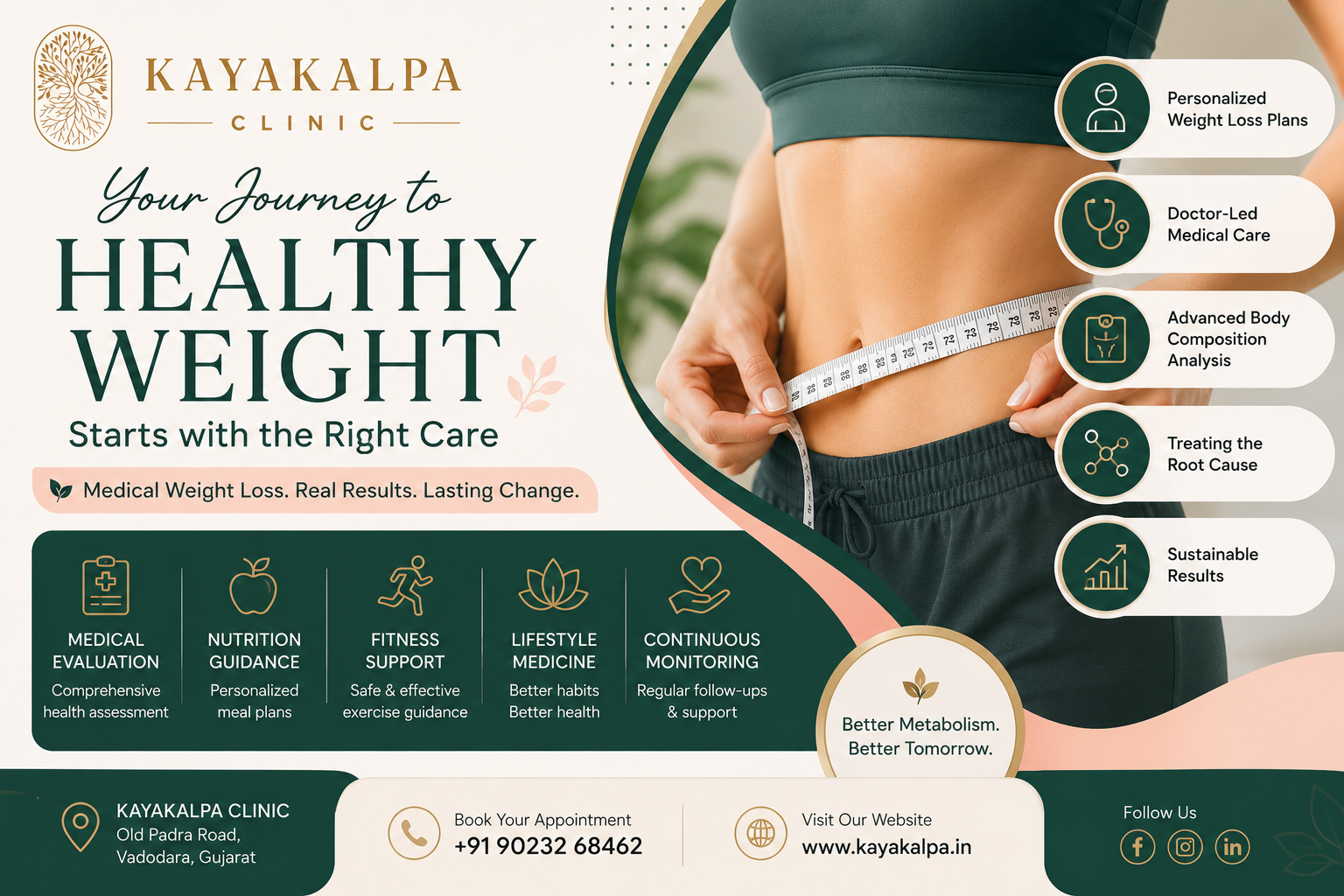
Looking for the Best Weight Loss Clinic in Vadodara?
If you’ve tried multiple diets, spent hours exercising, or followed the latest weight-loss trends without lasting results, you’re not alone.
Many people lose a few kilograms only to regain the weight within months. This cycle can be frustrating, affect confidence, and increase the risk of chronic diseases like diabetes, fatty liver disease, high blood pressure, and heart disease.
The problem is not a lack of motivation.
The problem is that most weight-loss programs focus only on reducing calories instead of understanding why the body is gaining weight in the first place.
At Kayakalpa Clinic in Vadodara, our approach is different. We practice evidence-based medical weight loss, combining Internal Medicine, Metabolic Medicine, and Lifestyle Medicine to identify the root cause of weight gain and help patients achieve sustainable, long-term results.
Why Weight Loss Is More Than Just Eating Less
One of the biggest myths surrounding obesity is that it is simply caused by overeating.
Modern medical research tells us a different story.
Body weight is influenced by a complex interaction of:
- Hormones
- Genetics
- Insulin resistance
- Sleep quality
- Stress
- Physical activity
- Gut health
- Medications
- Thyroid function
- Dietary habits
This is why two people eating similar diets may have very different weight-loss outcomes.
A personalized medical evaluation is essential to understand what is preventing healthy weight loss.
Why Crash Diets Usually Fail
Crash diets promise rapid results.
While many people initially lose weight, this loss is often temporary.
Common problems with crash diets include:
1. Muscle Loss
When calorie intake is severely restricted, the body breaks down muscle tissue along with fat.
Loss of muscle slows metabolism, making future weight loss more difficult.
2. Slower Metabolism
Very low-calorie diets trigger the body’s survival response.
The body begins conserving energy, making it harder to continue losing weight.
3. Weight Regain
Once the diet ends, normal eating often returns — but with a slower metabolism, weight is regained more quickly.
This “yo-yo dieting” cycle can increase body fat over time.
4. Nutritional Deficiencies
Restrictive diets may lead to inadequate intake of:
- Protein
- Iron
- Vitamin B12
- Vitamin D
- Calcium
These deficiencies can contribute to fatigue, hair loss, reduced immunity, and poor overall health.
What Is Medical Weight Loss?
Medical weight loss is a physician-supervised approach that focuses on treating the underlying causes of weight gain rather than simply reducing body weight.
Instead of prescribing the same diet to everyone, medical weight loss begins with understanding each patient’s unique health profile.
This includes evaluating:
- Metabolic health
- Blood sugar control
- Insulin resistance
- Thyroid function
- Hormonal health
- Lifestyle factors
- Body composition
- Existing medical conditions
Based on this assessment, a personalized treatment plan is created.
The goal is not just to lose weight — but to improve overall health and reduce the risk of chronic diseases.
Conditions That Can Make Weight Loss Difficult
Many patients struggle with weight loss because of underlying medical conditions.
Insulin Resistance
Insulin resistance is one of the most common reasons for stubborn weight gain.
It can cause:
- Increased fat storage
- Constant hunger
- Sugar cravings
- Difficulty losing abdominal fat
Left untreated, insulin resistance may progress to prediabetes and Type 2 diabetes.
Thyroid Disorders
An underactive thyroid slows metabolism and can lead to:
- Weight gain
- Fatigue
- Hair fall
- Constipation
- Cold intolerance
Correct diagnosis and treatment are essential for effective weight management.
Polycystic Ovary Syndrome (PCOS)
Women with PCOS often experience:
- Weight gain
- Irregular menstrual cycles
- Acne
- Hair growth
- Difficulty losing weight
Managing PCOS requires addressing both hormonal and metabolic health.
Poor Sleep and Stress
Sleep deprivation and chronic stress affect hormones that regulate hunger and satiety.
They can increase cravings, reduce energy levels, and make weight loss significantly more difficult.
Improving sleep and stress management is an important part of successful long-term weight management.
Why Body Composition Matters More Than Body Weight
The number on the weighing scale tells only part of the story.
Two people with the same weight may have very different body compositions.
One may have:
- Higher muscle mass
- Lower visceral fat
- Better metabolic health
The other may have:
- Higher body fat percentage
- Increased visceral fat
- Greater risk of diabetes and heart disease
At Kayakalpa Clinic, body composition analysis helps provide a more complete picture of health and guides personalized treatment.
🔗 Book Your Visit Today
Visit: 🌐 www.kayakalpa.in
📱 Call/WhatsApp: [+91 90232 68462]
📍 Google Maps: “Kayakalpa Clinic, Old Padra Road”
Comments
Post a Comment